SUMMARY
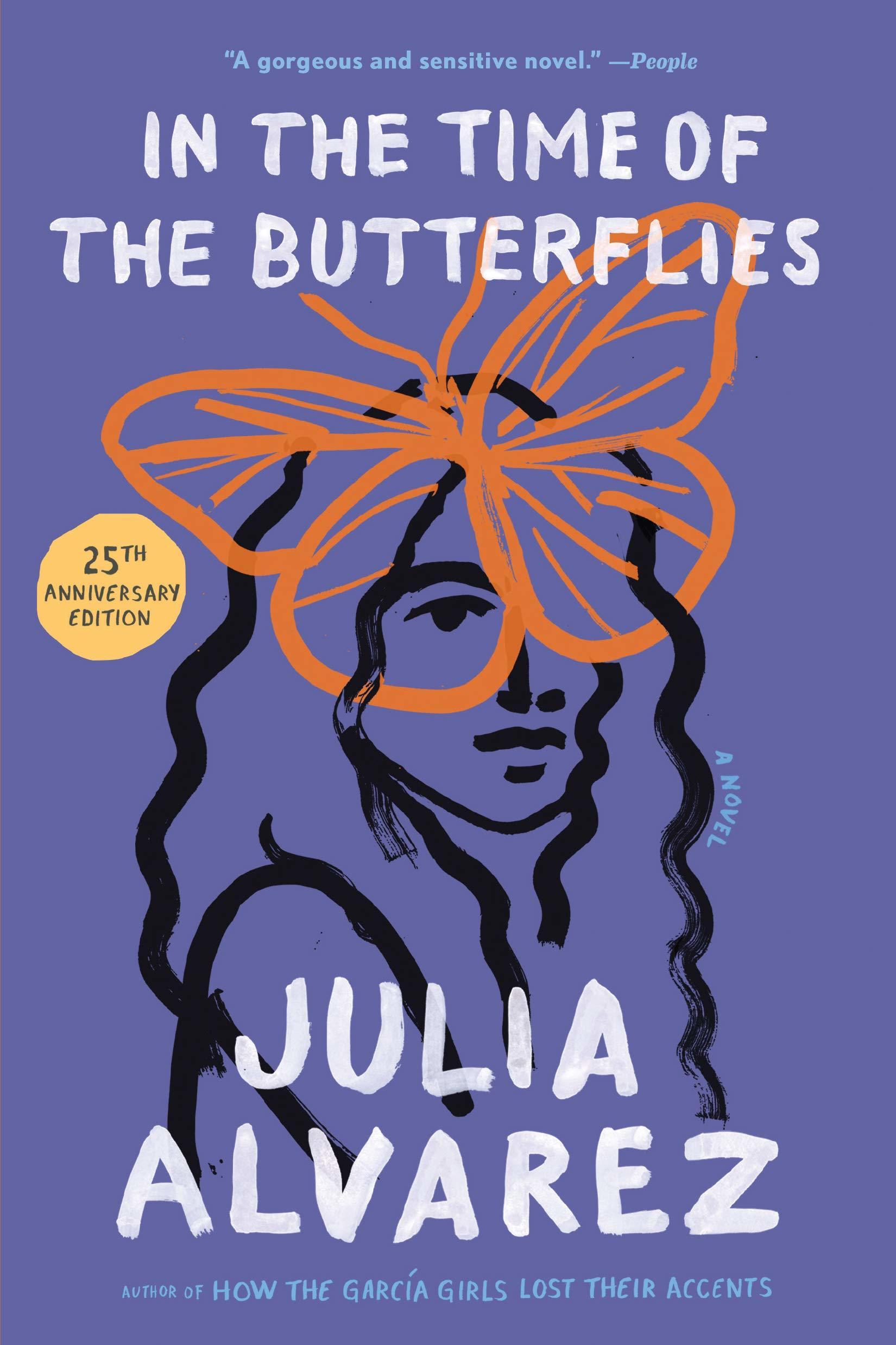
In the Time of the Butterflies by Julia Alvarez follows the lives of the Mirabal sisters—Patria, Minerva, María Teresa, and Dedé—who grow up under Rafael Trujillo’s brutal dictatorship in the Dominican Republic. They come from a well-to-do family, but they all feel Trujillo’s oppressive presence in different ways. Each sister narrates segments of the story, giving us a close look at their hopes, fears, and the choices that lead them into a dangerous resistance movement.
Patria, the eldest, begins the tale attending a religious pilgrimage. She’s drawn by her faith but haunted by questions about destiny and sacrifice. When her baby nearly drowns just before mass, she makes a vow to God that she’ll dedicate herself to the unborn. This near-tragic event changes her: she starts seeing injustice in her nation’s poverty and repression. Through her eyes, we witness the growing discontent under Trujillo’s rule.
Minerva, the second sister, carries a fiery spirit. As a girl, she torments boys at school and dreams of studying law. She joins secret gatherings of students who quietly denounce Trujillo’s regime. One afternoon, at a lavish party hosted by the dictator himself, he hints at knowing Minerva’s wavering loyalty. He tries to seduce her, but she rebuffs his advances. That moment cements her resolve to fight back.
María Teresa, called Mate, narrates in diary entries that start out light and girlish. She’s obsessed with fashion, friendships, and school gossip. But as she grows, her writing shifts from trivial notes to pulsating fear. She watches her sisters disappear into clandestine meetings. She worries for them—and for the family. Her diary becomes a record of everyday danger, showing how an ordinary girl adapts to extraordinary times.
Dedé, the only sister who does not join the underground movement, tells her story last. She stays back to care for the family and preserve her sisters’ memories. Through Dedé, we learn what it means to witness heroism and grief side by side. She confronts guilt and survivor’s sorrow as the only Mirabal left to tell their tale.
All four marry and build families, yet the sisters stay bound by blood and purpose. Minerva’s husband, Manolo, shares her revolutionary zeal. Patria’s husband, Pedrito, comforts her spiritual doubts but learns to resist too. María Teresa weds a gentle schoolmate, Leandro, who helps her capture the joy and terror of their secret meetings. Only Dedé marries a man who wants safety, not conflict.
In smoky back rooms and remote church basements, the sisters organize cells to distribute pamphlets, gather intelligence, and help prisoners. They code letters, shape slogans, and forge alliances with exiled Dominicans. Danger lurks everywhere. Minerva sneaks into Trujillo’s palace disguised as a dancer. Patria uses her church connections to shelter fugitives. Their efforts intensify tensions as the regime cracks down harder.
Trujillo’s secret police abduct, beat, and torture anyone suspected of dissent. The sisters mourn friends and comrades lost in prison. Even children suffer—Minerva’s daughters face school harassment for their mother’s defiance. Still, the Mirabals refuse to bow. They adopt the call sign Las Mariposas—the Butterflies—to symbolize hope fluttering against tyranny.
In November 1960, the sisters plan a trip to visit their imprisoned husbands. Patria, Minerva, and María Teresa set out early one morning, riding in an old jeep. Agents lie in wait on a lonely mountain road. Under the night sky, they ambush the car, bludgeon the sisters, and stage a crash to hide their crime. In the cold dawn, a patrolman finds the bodies tossed into a ravine.
Patria and Minerva die instantly; María Teresa survives long enough to whisper their code word: Libertad. News of the murders spreads like wildfire. The regime tries to claim it was an accident, but Dominicans see the pattern of violence repeated for decades.
Dedé learns of her sisters’ deaths in a hospital corridor. She breaks down and cries for the world to hear. The family confronts impossibly fresh grief. Yet public anger surges. Strikes erupt in the cities. Workers, students, even Trujillo’s inner circle turn against the dictator.
Within months, Trujillo’s own men plot his assassination. Word of the Butterflies’ martyrdom—sisters who died to free their people—galvanizes the nation. The dictator falls under a hail of bullets on a lonely highway much like the one where the Mirabals died.
After Trujillo’s death, Dedé opens a museum in the sisters’ former home. She preserves their letters, photos, and Mate’s diary, which the world later publishes. Visitors leave flowers at the gate and carry small mariposas—as reminders of bravery.
Years later, Dedé still wakes haunted by her sisters’ laughter and tears. She realizes heroism costs more than life sometimes—it demands the living to carry on the story. Each butterfly that crosses the sky whispers the same truth: freedom demands risk, and memory keeps its flame alive.
Julia Alvarez’s novel weaves personal voices into a unified chronicle of sacrifice. Through the Mirabal sisters, we see how ordinary people confront cruelty. We sense the fear and tenderness, the laughter and faith, that churn in every struggle. And when the final page turns, we understand how hope, like a butterfly, can alight on even the darkest days.
DETAILED SUMMARY
Plot Summary
1. The Seeds of Resistance
In the early 1940s, the Mirabal sisters—Patria, Minerva, María Teresa, and their eldest sibling Dedé—grow up under Rafael Trujillo’s oppressive Dominican dictatorship. Each sister feels the regime’s grip differently. Patria wrestles with her faith when she survives a near-death experience, while Minerva’s strong sense of justice flares after she’s barred from law school for standing up to a visiting official. María Teresa, shy and image-conscious at first, rebels by collecting magazine clippings of glamorous Hollywood actresses. Dedé, the eldest, quietly supports her sisters yet keeps her own doubts about taking up arms.
Despite their different temperaments, they share an unspoken bond: a longing for freedom and truth. Their mother watches from the sidelines, proud but fearful. She senses the coming storm but craves safety above all. Early on, the reader sees how the regime’s small injustices—denials of scholarship, church sermons twisted for propaganda—spark an awakening. The sisters’ individual journeys begin to converge toward a shared purpose.
By the time Minerva and María Teresa travel to the capital to pursue education, talk among student groups about Trujillo’s abuses becomes impossible to ignore. Secret meetings plant seeds of resistance in their hearts. They meet underground networks of lawyers and activists who risk everything to speak out. The sisters start to grasp that real change requires more than whispered complaints; it demands courage.
Meanwhile, Patria’s growing involvement in church work introduces her to ordinary peasants who suffer under forced crop quotas and arbitrary arrests. She sees—and prays over—the bodies of laborers beaten by Trujillo’s secret police. These experiences bring her closer to the resistance, though she hesitates to break her own vow to focus solely on faith. Yet she cannot turn away when she learns a friend has vanished for distributing leaflets.
The stage is set: four sisters, each hardened by personal pain, preparing separately to face a regime that brooks no dissent. Their stories, once distinct, move inexorably toward a shared act of defiance.
2. Minerva’s Oath
Minerva Mirabal arrives at university brimming with ideals and hopes. She joins a study circle where students debate the meaning of liberty and justice. One evening, she watches as Trujillo cavalies past in a lavish motorcade. His arrogance stings her. Soon, she shares a secret handshake with fellow activists to commemorate each guest murdered by Trujillo’s thugs. Minerva’s restless mind ignites into action.
She falls in love with Lio, a young law student with a personal vendetta: his father died in custody. Together, they coordinate clandestine pamphlet runs, slipping banned newspapers into church pews. Minerva’s bold spirit galvanizes the cell. She confronts Trujillo in person at a party—refusing his inappropriate advances. Her public defiance shocks the regime. Trujillo bans her family from his events and demands she marry a prince from a neighboring country to silence her. Minerva spurns him, sealing her fate and that of her sisters.
Word spreads: Minerva is a threat. She must flee for a short time to a remote farm. There, isolated, she sweats by day and plots by night. Each letter she writes home carries coded messages to Dedé and Patria: “Stay alert. Freedom is near.” Her courage cements her sisters’ willingness to join the struggle. Her oath becomes theirs.
3. Patria’s Crossroads
Patria, once the devout sister who fled politics, hears of Minerva’s banishment. Her faith trembles. She travels to a rural Church retreat where she once found solace. A stormy vigil leads her to rethink prayer as passive waiting. She vows to act. Finding María Teresa and Minerva, she throws herself into organizing safe houses and running medicine to wounded activists. Her role morphs from supporter to strategist.
Yet Patria trembles each time she hears gunshots in neighboring villages. She frets over her young son, Nelson. She nearly falters at a crossroads when soldiers search her car full of leaflets. Only a quick prayer—and a hidden Bible verse clipped inside the pamphlets—spares her. Each near miss drives home the cost of conviction. She learns to steel her heart.
In whispered masses at dawn, she and the sisters pray together—this time for others’ safety. And in the hush that follows, they plot their next mission: distributing manifestos at carnival. Patria stands beside Minerva, clutching her rosary and the manifesto all at once.
4. María Teresa’s Journal
María Teresa, the youngest, starts a secret diary she calls “Mate.” She fills pages with gossip and dreams of Paris, but soon she replaces fashion tips with coded plans for safe passage out of the country. Through her eyes, daily life under Trujillo becomes vivid: long food lines, curfews met by curdled fear, police checkpoints rife with bribes. She notes fellow students disappearing overnight without trial.
Her voice grows bolder each entry. She lists neighbors who smuggle radio batteries, and scraps theories for how to broadcast messages via church bells. When Minerva is exiled temporarily, María Teresa’s diary becomes her lifeline: she records every conversation with town elders, hiding plans in footnotes to evade prying eyes. Her youthful idealism hardens into resolve.
T-Mare, as she signs her last entries, dreams no more of ball gowns. Instead, she presses the autograph of a fallen martyr into her diary as a keepsake. Her small page turns ripple into waves of rebellion.
5. The Spring of Conspiracy
By 1960, the sisters and their network prepare a bold operation: distributing leaflets on February 14th, Valentine’s Day, to mark both love and rebellion. They meet in secret at a plantation house. Nervous laughter hides steel in their eyes. They crack open sacks of leaflets stamped: “NO MÁS.”
On that dawn, in Diego de Ocampo, the sisters drop hundreds of leaflets from a parked car. The fluttering papers land on laundry lines and church pews. Miners, peasants, and students snatch them up. Rumors bubble into action. Guards baton a man who tries to read aloud. In response, small town councils call for open meetings. The regime scrambles.
The sisters stand back, watching smoke rise from midday bonfires where villagers burn Trujillo’s portraits. They share knowing glances: their act has lit a fuse.
6. Aftermath and Martyrdom
Trujillo’s secret police tighten the noose. They ambush the Mirabal sisters while they travel back home late at night. After a brief scuffle, Patria, Minerva, and María Teresa are murdered. Dedé, spared by chance, finds their battered bodies under an overturned jeep. The shock ripples nationwide.
Public outcry swells. Even loyalists murmur protests in small circles. Flowers bloom on the sisters’ graves, and secret societies name themselves “Las Mariposas.” The regime tries to blame an accident, but whispers of vengeance grow too loud. International attention dims Trujillo’s popularity.
Within a year, the dictator is assassinated. The sisters’ deaths become the spark that toppled a tyrant. Their sacrifice echoes through Dominican history, transforming them into symbols of courage and hope.
Characters
1. Minerva Mirabal (Protagonist and catalyst of rebellion)
“We are not afraid. We are the butterflies—free at last.”
Minerva stands out for her fiery spirit and moral clarity. From an early age, she balks at injustice. When authorities bar her from law school for confronting a government official, she chooses activism over privilege. She organizes clandestine meetings, writes leaflets, and challenges Trujillo directly.
Her relationship with political circles deepens as she falls for Lio, another dissident. She never wavers, even when threatened with exile. Minerva’s charisma draws her sisters into the struggle. She teaches them that standing up for truth, though perilous, is worth every risk.
2. Patria Mercedes Mirabal (Reluctant convert turned strategist)
“God’s mercy cannot be limited by fear.”
Patria begins as deeply religious, seeking sanctuary in church rather than politics. A near-fatal tragedy shakes her faith into action. She adapts her nurturing instincts—once reserved for her son and parishioners—into care for underground fighters.
Her steady courage under fire and tactical acumen help coordinate safe houses and medical aid. Though she worries for her children, she sacrifices personal comfort for a greater cause. Patria becomes the group’s moral compass.
3. María Teresa (Tere) Mirabal (Chronicler and youthful idealist)
“If words can kill a tyrant, my pen is my weapon.”
María Teresa starts as a girl who collects magazine clippings. Her transformation into a revolutionary stems from her diary, where she hides coded messages. She records every injustice, giving voice to silent victims.
Her youthful perspective reveals daily life’s cracks under dictatorship—the fear, the gossip, the stolen glances at banned news. In her final diary entry, she transcribes plans for nationwide protests. Tere’s voice becomes a rallying cry beyond her years.
4. Dedé Mirabal (Survivor and keeper of memory)
“I live so others remember.”
Dedé, the eldest, hesitates to join her sisters in direct action. She remains behind, tending to family and questioning the wisdom of rebellion. Yet after the others’ deaths, she perseveres, preserving their story.
For decades, she gives interviews, counsels young activists, and oversees a museum in their honor. Dedé’s legacy lies in turning personal grief into collective memory.
5. Rafael Trujillo (Antagonist and Dominican dictator)
“I am the only voice that matters in this country.”
Trujillo wields brute force and propaganda to maintain power. Charming in public, he conceals a ruthless streak: secret police, torture, and assassinations keep citizens in line.
He admires his own image, plastered on postcards and billboards. Yet Minerva’s defiance enrages him, revealing cracks in his supposed invincibility. His downfall begins with the backlash to the butterflies’ martyrdom.
Themes Analysis
1. Resistance vs. Fear
In the Time of the Butterflies shows how ordinary people confront terror with courage. The Mirabals live under a regime built on fear—curfews, disappearances, and propaganda. Yet each sister finds a way to resist. Minerva transforms anger into activism. Patria turns prayer into planning. Their defiance illustrates that fear, left unchallenged, cements tyranny; but even a small act of dissent can shatter that grip.
The sisters’ story suggests that resistance is not an all-or-nothing choice. It exists on a spectrum: speaking out in class, hiding pamphlets, risking exile. Their different paths converge, proving that collective action, born from personal courage, can unmake a dictator.
Ultimately, the narrative underscores that living in fear is worse than risking death. The Mirabals choose hope over safety, showing how hope itself can become a powerful weapon.
2. Sisterhood and Solidarity
Family bonds anchor the novel’s emotional core. The sisters’ loyalty transcends disagreement. Dedé doubts the cause, but she never abandons her sisters. Patria, initially apolitical, joins when she sees their unity tested. María Teresa’s journal binds personal memory with political history.
Their solidarity spreads beyond blood ties. They recruit neighbors, students, and churchgoers. Each leaflet shared cements a broader community. The “butterflies” become a symbol of collective strength. Even after their deaths, Dedé’s preservation of their story honors that unity.
The theme probes how personal relationships foster political change. It suggests that revolutions depend not just on grand ideologies, but on trust, love, and mutual sacrifice.
3. Memory and Legacy
The sisters’ martyrdom transforms them into national icons. Dedé’s post-war role tests how one preserves truth without mythologizing. She grapples with memory’s fragility: she risks forgetting small details of María Teresa’s quirks, Minerva’s jokes, Patria’s prayers.
Meanwhile, official history tries to co-opt or erase the butterflies. Monuments, textbooks, and speeches recast them in sanitized tones. The novel questions: who owns history? The people who lived it or those who write about it?
By framing the narrative through interviews and personal testimonies, Alvarez insists that memory must remain alive. Legacy thrives when stories pass from generation to generation, unfiltered by those hungry for power.
Key Plot Devices
1. Secret Leaflet Campaigns
The distribution of anti-regime leaflets becomes the catalyst for mass dissent. These leaflets, stamped with bold slogans, puncture the silence enforced by Trujillo’s spies. Each slip of paper in a church pew or laundry line whispers a promise: you are not alone.
As villagers read them aloud, small sparks ignite into bonfires of resistance. The butterfly symbol stenciled on each page turns local acts into a unified movement. Leaflets evolve from mere paper into a pulse felt across towns.
Eventually, the regime treats them as a mortal threat. Harassment and ambushes follow. The sisters’ willingness to risk travel for these leaflets underscores their power: words can outrun bullets.
2. María Teresa’s Diary
Tere’s journal transforms from a teenage scrapbook into an encrypted blueprint for revolt. Hidden among fashion clippings and love notes, she codes meeting times and safe routes. The diary becomes a record of ordinary life under dictatorship, lending human faces to abstract tyranny.
When published posthumously, it galvanizes a new generation. Young activists see their own fears and hopes mirrored in her pages. The personal entries on longing and grief resonate globally, proving small voices can echo far.
3. The Valentine’s Day Operation
Choosing February 14th to distribute leaflets fuses love and rebellion. Against carnival revelers, fluttering leaflets serve as an unexpected Valentine to oppressed citizens. The timing ensures maximum exposure: people gather, laugh, and then read.
This operation shatters regime complacency. Security forces scramble to contain a threat they once overlooked. The bold act cements the Mirabals’ reputation for daring and links romance to resistance.