Summary
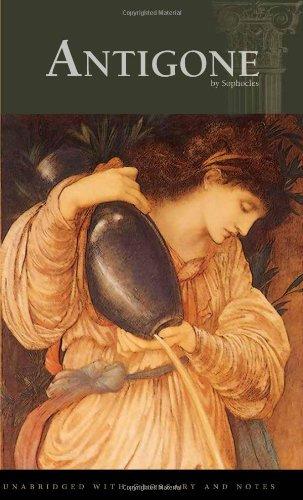
“Antigone,” written by Sophocles, follows the tragic struggle of its heroine against the edict of her uncle, King Creon, and explores themes of loyalty, fate, and divine law.
After a fierce battle for Thebes ends, Creon, now ruler, issues a decree forbidding anyone to bury Polynices, who led an assault on his own city. Creon proclaims that violators will face death. News of this harsh command spreads quickly, leaving the royal household tense and fearful. Many citizens whisper about divine justice and honor owed to the dead. Creon’s resolve seems firm, yet murmurs of dissent float through the city.
Antigone, sister to Polynices, hears of the ban and feels torn between family duty and civic law. She finds her sister, Ismene, weeping by the palace gates. Ismene pleads to obey Creon to avoid death. Antigone, determined, insists that divine law outranks any mortal decree. She claims she will bury her brother despite the king’s orders.
Night falls, and Antigone slips through the guarded streets toward Polynices’ unburied body. With handfuls of earth, she performs the ancient rites, sprinkling dust and crying prayers to the gods. A sudden gust of wind scatters the soil, but she presses on, shivering under the moonlight. The act feels both sacred and forbidden.
A sentry discovers her at dawn and drags her before Creon’s throne. Antigone stands proud, unyielding. She admits the burial and refuses to deny her actions. Creon, enraged, demands obedience. He condemns her as traitor and threat to state order.
Ismene arrives, shaken and guilty, and begs forgiveness. She claims she only helped after the deed and offers to share in the punishment. Antigone rejects Ismene’s confession, wishing to bear the blame alone. She speaks of duty and love for her brother, her voice steady and clear. Creon scolds both sisters, but reserves judgment on Ismene.
Creon convenes a council. His son Haemon, engaged to Antigone, pleads for mercy. He argues that the people pity her and that wisdom lies in listening to many voices. Creon will not yield. Haemon storms out, breaking his father’s heart and tempting fate. Tension thickens between private love and public duty.
An uneasy silence settles over Thebes. Creon orders Antigone entombed alive in a cave, stocked with only a small loaf of bread. The walls feel cold and unforgiving, a tomb before death. Antigone accepts her fate, praying to the gods and lamenting her lonely end. She clings to hope of reunion with Polynices beyond the grave.
The blind prophet Tiresias arrives at the palace, pleading with Creon to relent. He warns that the gods angered by the unburied dead will unleash plague on Thebes. Creon, fearful of public unrest, accuses Tiresias of trickery. But the prophet grimly predicts doom. Creon, unsettled by this dire forecast, finally begins to doubt his stubborn course.
Under mounting pressure, Creon orders a rescue party for Antigone. He hurries to the cave with a torch and keys clinking. When they arrive, they find Antigone dead by suicide, hanging from the low ceiling. Haemon lies lifeless by her side, killed himself in despair. Creon staggers back, guilt carving lines across his face.
In the silence of loss, Eurydice, Creon’s wife, appears distraught. She curses the day that gave him power, blaming his stubborn pride for the deaths of their only son and niece. Without a word more, she retreats to her quarters and ends her life with a dagger against her heart.
Creon, broken and alone, collapses inside the empty throne room. He gathers his ruined pride like shattered pottery at his feet. The chorus chants a lament for the fallen family. Creon rues his choice and begs forgiveness from the gods and his own soul. The air hangs heavy with grief and regret.
The final chorus steps forward, reminding Thebans—and all who hear the tale—that pride before the gods invites ruin. They speak of wisdom born through suffering and warn rulers to heed both human compassion and divine law. The chorus leaves the city under solemn skies, changed by sorrow and clarity.
Sophocles’ “Antigone” closes on a note of bitter insight. It shows how rigid authority and personal stubbornness collide with moral duty and love. The tragedies of Antigone, Haemon, and Eurydice illuminate the fragile line between justice and tyranny. Thebes, once proud, remains scarred by a family’s suffering.
In its timeless power, “Antigone” asks you to consider where true authority lies and what price you will pay for loyalty. It teaches that mercy often trumps might, and that the gods—though silent—watch every heart.
Detailed Summary
Plot Summary
1. The Royal Decree and Its Aftermath
Creon, newly crowned king of Thebes, issues a strict edict forbidding the burial of Polynices, who attacked his own city. With sharp resolve, Creon declares that anyone defying this law will face death. His proclamation emphasizes state loyalty above all else.
The Chorus of Theban elders reacts with unease. They respect Creon’s authority but feel tension between human law and older divine customs. Their harmonious odes hint at warning—that rigid rule can backfire when it clashes with sacred tradition.
Meanwhile, Antigone learns of her brother’s unburied body. Shock gives way to determination. She resolves silently to honor her kin, unaware that defying the king’s orders will ignite a tragic chain of events.
2. Antigone’s Quiet Rebellion
Under cover of darkness, Antigone approaches Polynices’ corpse. She murmurs prayers for the dead before laying dust and libations. Each small gesture carries deep significance—she prioritizes familial duty over royal command.
Her sister Ismene watches from a distance. Caught between love and fear, Ismene pleads with Antigone to relent. Antigone, however, stands firm: loyalty to the gods compels her actions.
Though simple in appearance, this secret rite symbolizes a clash: moral conscience versus political authority. Antigone departs unchallenged, but the ramifications loom large for Thebes.
3. The Watchman’s Discovery
At dawn, a sentry discovers Polynices partially covered by loose dirt. Fearful, he heads to Creon’s palace with grim news. His footsteps echo through silent streets, marking the break in Creon’s order.
Presented before the king, the Watchman stumbles over words. He worships Creon’s rule yet must condemn someone to save himself. Creon’s fury boils over—he demands names and punishments.
This scene heightens tension. The king’s rigidity meets human frailty. The Watchman’s trembling admission underscores how fear of authority can corrupt both enforcers and citizens.
4. Antigone Brought to Judgment
Creon confronts Antigone in his throne room. She stands defiant and unmoved by threats. Her voice rings out: she honors her brother because the gods demand such loyalty.
Creon responds with logical harshness. He values civil stability above divine law. He calls her stubborn and proud, unable to see her moral clarity.
Their clash resonates through the hall. On one side, an absolute ruler enforcing civic order. On the other, a lone woman guided by unwritten divine imperatives. Neither yields, setting fate into motion.
5. Haemon’s Plea and Teiresias’s Warning
Haemon, Creon’s son and Antigone’s fiancé, enters with sorrow and anger. He urges his father to show mercy. Their exchange sways between filial duty and political loyalty.
Creon refuses. He views compassion as weakness that would shatter his reign. Haemon storms out, vowing never again to speak to his father.
Soon after, blind prophet Teiresias arrives. He warns Creon of divine wrath: polluting Thebes with Polynices’ unholy rest will bring ruin. Even nature will revolt. Yet the king, stubborn as ever, accuses Teiresias of bribery rather than prophecy.
6. Unraveling and Tragic Ends
Late that night, Creon hesitates. At last, fear shakes his pride. He reverses his decree and hurries to rescue Antigone from the vault. But fate runs its course too swiftly.
Antigone has already taken her life. Hearing this, Haemon attempts to kill his father, fails, then kills himself beside his bride. Creon’s heart finally splinters in grief.
Eurydice, Creon’s queen, learns of Haemon’s death. She curses her husband silently and falls upon her sword. Creon, left alone, mourns in bitter self-reproach. The play closes on the Chorus lamenting that stubborn pride and flouting divine law bring the heaviest downfall.
Characters
1. Antigone (Protagonist)
“I will bury him; and if I must die, I say that this crime is holy.”
Antigone embodies unwavering moral duty. She respects divine law above any earthly edict. When Creon forbids Polynices’ burial, she defies him, believing that unwritten, eternal laws supersede temporary royal commands.
Her bravery comes at great cost. She confronts Creon with calm conviction, even knowing death awaits. Her refusal to compromise reveals a spirit driven by loyalty and righteousness, making her a tragic hero whose strength turns fatal.
2. Creon (Antagonist/King of Thebes)
“Whoever places a friend above the good of his own country, he is nothing.”
Creon rules with a strict sense of order and civic duty. Having faced a civil war, he fears anarchy more than anything. To him, discipline and loyalty underpin a stable state.
His rigid pride blinds him to mercy. Even when prophets warn him, he clings to authority. His tragic flaw—hubris—drives both his rise and his fall, as he learns too late that divine laws match or exceed mortal ones.
3. Ismene (Supporting Character/Antigone’s Sister)
“I am afraid; I have no strength to break the laws of the land.”
Ismene represents caution and obedience. She fears Creon’s wrath and initially refuses to help Antigone. Torn between sisterly love and self-preservation, she illustrates how men and women often bow to authority out of fear.
Yet her loyalty to Antigone surfaces in the end. Though she cannot help bury Polynices, she offers to share Antigone’s fate. This change highlights her growth from timidity toward solidarity.
4. Haemon (Supporting Character/Creon’s Son)
“Then she must die. But her death will cause another.”
Haemon stands between father and fiancée. Loyal to Creon yet in love with Antigone, he appeals for reason and mercy. His passion and logic contrast sharply with his father’s inflexibility.
When Creon refuses, Haemon’s grief transforms into despair. His suicide underscores the ruin wrought by Creon’s obstinacy and the pain inflicted on those caught between power and compassion.
5. Teiresias (Supporting Character/Blind Prophet)
“The time draws near when you shall pay back corpse for corpse.”
Teiresias speaks for the gods. Blind in body, he sees spiritual truths far clearer than any mortal. His warnings to Creon carry fatal significance: neglect divine law and face ruin.
Though Creon dismisses him at first, Teiresias’s prophecy proves accurate. His role emphasizes that human logic can fail when it excludes divine will.
6. Eurydice (Supporting Character/Queen of Thebes)
“Woe, woe! My poor children, my worst fate.”
Eurydice lives largely offstage yet her presence haunts Creon. A silent figure of grace, she represents the private cost of public decisions. Her grief over Haemon’s death reflects the collateral damage of Creon’s pride.
Her final act—taking her own life—compounds Creon’s ruin, leaving him utterly broken. Eurydice’s quiet dignity contrasts with her husband’s bombast.
Themes Analysis
1. Law Versus Morality
Sophocles explores conflict between state law and unwritten moral codes. Creon enforces his decree to uphold order. Antigone defies it, believing divine law demands respect for family even beyond death.
This tension reveals a deeper question: should people follow rulers or their conscience? The play suggests that laws must align with higher moral principles; otherwise they sow injustice and suffering.
2. Pride and Power
Hubris drives the tragedy. Creon’s excessive pride prevents him from admitting error or heeding counsel. He equates mercy with weakness and punishes loyalty that threatens his authority.
His downfall warns that unchecked power devastates both ruler and ruled. Sophocles invites audiences to temper ambition with humility, lest pride become a destructive force.
3. Fate and Divine Will
Greek tragedy often links human actions to fate. In Antigone, destiny unfolds through divine mandates conveyed by prophets and Chorus. Creon’s choices appear free, yet they align with a tragic pattern unseen by mortals.
Teiresias makes clear that the gods govern life and death. Ignoring their will invites catastrophic consequences. Sophocles thus underscores that humans navigate within boundaries set by higher powers.
Key Plot Devices
1. Creon’s Proclamation
The king’s edict against burying Polynices sets the central conflict in motion. By publicly announcing this law, Creon forces citizens to choose between obedience to the state and loyalty to the gods.
This decree not only tests individual morality but also reveals the fragile balance between civic order and divine ordinance. It becomes the catalyst for Antigone’s rebellion and the play’s tragic unraveling.
2. The Chorus
The Chorus of Theban elders serves as both commentator and moral compass. Their odes reflect collective anxiety over Creon’s harsh rule and hint at divine displeasure.
They guide the audience’s understanding, praising moderation and warning against extremes. In each choral ode, Sophocles embeds thematic insight, making the Chorus a vital lens on unfolding events.
3. Prophecy of Teiresias
Teiresias’s warning crystallizes the play’s moral stakes. His blind authority gives weight to the divine voice. When he predicts Thebes’ ruin, he forces Creon into confrontation with fate.
This prophecy propels Creon’s final reversal. Yet its timing—too late to save Antigone—drives home the tragic cost of pride. The device underscores that ignoring divine counsel brings irreversible harm.