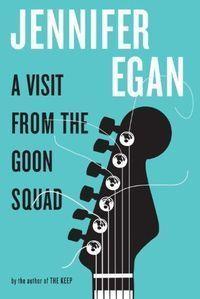
SUMMARY
A Visit from the Goon Squad by Jennifer Egan weaves together the lives of music executive Bennie Salazar, his assistant Sasha, and a host of other characters across two decades. Through linked stories, Egan explores time, memory, and the ever-shifting bonds that tie people to one another. Each chapter shifts perspective and tone, offering snapshots of moments both pivotal and mundane.
The first section follows Bennie Salazar, who once thrived in the punk and new wave scene of 1970s New York. He now runs a successful recording studio called Goon Squad. Sasha Carrato, a college dropout with punk-rock hair and a sharp tongue, joins him as his assistant. She idolizes Bennie’s cool professionalism, unaware of how much time has eroded his own confidence.
In an early flashback, we see Sasha as a ten-year-old girl dropped off by her mother at her grandfather’s home in Pittsburgh. She faces isolation and awkwardness among relatives she barely knows. The scene underscores her longing for connection—a theme that will echo throughout the novel.
Back in the present, Bennie sends Sasha out to retrieve an aging rock star named Rhea Klein. The meeting doesn’t go as planned. Rhea, once vibrant, now seems haunted by past losses. Sasha watches Bennie struggle to broker a deal, and she both admires and worries for him.
Later, we encounter two industry executives meeting in a Los Angeles hotel bar. Their conversation drifts between nostalgia for the golden days of vinyl and anxiety over digital downloads. They speak in indifferent tones but share a common unease: technology is upending everything they know.
A quieter chapter shifts to Jocelyn, a childhood friend of Sasha’s. Now a voice-over actress for reality television, Jocelyn records monotonous lines in a sound booth. She drifts into memories of high school drama and unspoken crushes. The contrast between her current career and youthful ambition highlights how people drift apart.
The narrative then follows a hit song co-written by Bennie and his old bandmate Alfred. Alfred’s section unfolds through a PowerPoint presentation, complete with bullet points and clip art. He charts the band’s rise and fall with deadpan humor, revealing how ambition warped their friendship and left him stranded.
Alfred’s slides mention Julia, his childhood friend and brief lover. In her chapter, Julia works as a financial analyst at Morgan Stanley. She struggles to recall the melody Alfred once played for her on guitar. Her corporate cubicle seems a far cry from her youthful artistic dreams.
Another detour brings us to Scotty Hausmann, a teenage musician signed by Bennie. He records a breakthrough album at Goon Squad but succumbs to drugs and self-destruction. His story unravels through police interviews and medical records, starkly contrasting the earlier glamour of Bennie’s studio.
Egan then introduces Lou Kline, an aging record label executive who lives alone in Queens. He clings to old cassette tapes and 8-track players. His loneliness seeps through brief anecdotes about failed marriages and forgotten protégés. Time, he realizes, doesn’t reward loyalty.
In a poignant turn, Sasha returns to Pittsburgh after many years. She visits her ailing grandfather, who lies bedridden in a care facility. Their reunion brims with regret and untold apologies. Sasha confronts how her restless search for meaning drove her away from family.
Bennie appears again, older and wearier. He confides in a friend about regrets—missed chances with his own daughter and the erosion of his artistic integrity. His self-portrait grows more complex. He wonders if he can reclaim the passion that once defined him.
Near the end, Egan assembles her characters at a reunion party in New York. Technology glitches, memories clash, and old wounds reopen. A viral video from the event underscores how digital culture packages and sells our most intimate moments back to us.
In the final pages, Sasha sequences an album of lost demos from Bennie’s early days. The music plays in the background as she reflects on how the past can never be fully restored. Yet she senses that its fragments still matter.
Egan closes with a brief, elegiac snapshot of childhood innocence—a girl playing piano on a stage before an empty auditorium. It reminds us that time inevitably slips away. Even as we chase success and connection, we remain haunted by moments that disappear before we can hold onto them.
Throughout A Visit from the Goon Squad, Jennifer Egan experiments with form and voice to show how people hurtle through time. Her interconnected chapters feel like fractured melodies that harmonize only when heard together. In the end, the novel becomes a tribute to impermanence, urging readers to cherish the present even as they reckon with what they have lost.
DETAILED SUMMARY
Plot Summary
1. PowerPoint Party and Sasha’s Hack
The novel opens at a holiday party hosted by Bennie Salazar, a former punk rocker turned music executive. He fires a failing band called the Goon Squad via a glitzy PowerPoint presentation. Guests, including Bennie’s assistants and family members, watch the death of a project as if it were a performance.
At the same gathering, Sasha, Bennie’s childhood friend and hacker extraordinaire, covertly infiltrates the party’s digital displays. She replaces Bennie’s slides with her own commentary, critiquing his corporate world and playful jabs at the glamorous guests. Her action underlines her complex relationship with time: she’s both preserving memories and disrupting the present.
Their interaction highlights the tension between nostalgia and progress. Bennie recognizes Sasha’s gesture as a form of affection, even if it embarrasses him. Meanwhile, Sasha mourns the loss of their shared youth in Oakland. Time, in these opening pages, feels both frozen in adolescence and relentless in its forward push.
2. The Gold Cure and Bennie’s Loss
In a later chapter, Bennie travels to Italy to find gold dust, hoping to revive his label by pressing records on rare, precious material. He enlists a forger to melt down scrap gold into vinyl. This quest becomes a metaphor for Bennie’s desire to stop time: he wants music to endure forever.
While chasing this dream, Bennie receives word that his long-time mentor and friend, Lou Kline, has died. Lou represented the old guard—someone who understood how music could capture an era’s pulse. His death forces Bennie to confront the mortality he’s spent his career defying through records.
Bennie’s Italian caper ends in disappointment: the gold vinyl melts poorly, and the project fails. He realizes that neither rare materials nor industry tricks can bottle time. This failure propels him toward unexpected collaborations and personal reckonings.
3. Ask Me If I Care and Rob’s Redemption
Rob, Bennie’s assistant, undergoes his own arc. Once Sasha’s boyfriend and a law student, he spirals into despair after Sasha’s betrayal at the party. Rob quits law school and drifts, struggling to find meaning.
He lands a job at a Napa winery, far from New York’s music scene. Yet he can’t escape his past. When Lou’s funeral brings him back to the city, Bennie offers him a position in artist relations. Rob accepts, hoping to atone for past errors and rebuild his self-worth.
This journey shows how people define themselves through work. Rob’s transformation from disillusioned student to valued industry insider marks a small victory over time’s relentless erosion of opportunity.
4. Safari and the Cousins’ Road Trip
Scotty Hausmann, Sasha’s cousin, narrates a youthful road trip from New York to California. He and their cousin hop freight trains, camping under the stars and living off hamburgers. Their journey is raw and impulsive, a stark contrast to Bennie’s polished world.
Through Scotty’s eyes, we glimpse the perils and joys of itinerant youth. He and his friend Megan chase freedom but encounter moments of violence and disappointment. The thrill of the rails eventually fades when they barely escape arrest in Tahoe.
Scotty’s naive optimism clashes with the harsh lessons of the road. His story underscores the novel’s recurring motif: time wounds all things, yet memory can burn bright. Even fleeting adventures leave deep scars.
5. A to B and Lou’s Factory Redemption
In this arc, Lou Kline appears posthumously through letters he wrote to his wife. Lou, once a music journalist turned memorabilia collector, had a troubled relationship with Bennie and Sasha. His backstory reveals regrets about fame and fatherhood.
Lou’s letters trace his late-life attempt to open a factory making vintage instruments. He hopes to connect younger musicians to analog sound. But health issues and market shifts stall his dreams. His letters blend pride, sorrow, and an aching love for craftsmanship.
Through these correspondence, we understand how Lou sought to preserve beauty against time’s decay. Even in failure, he shines as a figure who refused to surrender to cynicism. His legacy ripples through the others’ lives after his passing.
6. Invisible Hour and Time’s Final Reckoning
The book culminates in an extended car ride narrated by Sasha. She drives alongside Bennie, now older and wearier. They talk about their intertwined pasts—missed opportunities, lingering regrets, and the fierce affection beneath their quarrels.
Sasha recounts how she nearly abandoned her hacking career and how Bennie nearly gave up on his label. Their conversation moves in and out of past and present, mirroring the novel’s nonlinear structure. Both confess fears about growing older and losing touch with what once mattered.
This final arc crystallizes the book’s title. The “goon squad” isn’t a band but time itself, a relentless enforcer that steals youth, talent, and promise. Yet Sasha and Bennie’s bond endures, shaped by shared history and a fragile hope for kindness in a fleeting world.
Characters
1. Bennie Salazar (Protagonist / Music Executive)
Time is a goon. It’s a bully. It just knocks you down until you can’t get up.
Bennie Salazar rose from punk drummer to powerful record label head. He wields corporate power with the flair of a showman, using presentations and gold-pressed vinyl to prove he still matters. Yet beneath his confident veneer, Bennie fears obsolescence. He chases novelty in music, hoping to halt time’s erosion of his taste and relevance.
His relationships reveal his complexity. He loves Sasha as both a muse and a sister, resenting her independence. He mentors Rob yet envies the younger man’s freedom. Through his failures and triumphs, Bennie embodies the struggle to hold onto passion in an industry that prizes the new and the next. His journey shows how ambition can both propel and consume a person.
2. Sasha (Key Supporting Character / Hacker)
I replace their slides with my own. It’s not vandalism. It’s truth.
Sasha began as Bennie’s childhood friend, fascinated by technology’s promise and peril. She disrupts corporate events by hacking screens, exposing the emptiness behind polished images. Over the years, she struggles with addiction, isolation, and the impulse to both connect and retreat.
Her narratives jump through time, revealing her restless mind. She yearns for authenticity yet sabotages intimacy. Driving cross-country or tapping keyboard keys, Sasha remains haunted by memory and driven by curiosity. Her final moment with Bennie shows growth: she accepts that she can’t outrun time but can still forge meaning.
3. Rob (Supporting Character / Bennie’s Assistant)
I thought I lost everything. Turns out I just needed someone to believe I could still matter.
Rob drifts after Sasha’s betrayal at the holiday party. He leaves law school and seeks redemption in manual work, tending vines in Napa. His hands learn new calluses, but his heart still aches with regret. When Bennie offers him a second chance, Rob embraces the chance to rebuild his life in the music industry.
Through Rob, the novel shows how small kindnesses can reverse time’s harm. He learns to listen to artists, to care about their stories rather than just their sales. His arc from despair to purpose underscores the book’s faith in second acts.
4. Scotty Hausmann (Supporting Character / Cousin and Narrator)
We rode the rails like kings until we learned how fast a king can fall.
Scotty narrates a wild freight-train journey from New York to California. He relishes the rawness of train-hopping, the thrill of headlights in the night, and the fear of capture. Yet his voice cracks when he recalls Megan’s departure and the loneliness that trailed him home.
His youthful exuberance meets the sobering truth that freedom can cost more than you hope. Scotty’s narrative voice, frank and unvarnished, reminds the reader how time hardens youthful dreams. He returns richer in experience but poorer in illusions.
5. Lou Kline (Supporting Character / Mentor)
If you can hold a note on a broken string, you still have music in you.
Lou Kline started as a rock journalist before turning memorabilia collector. He navigated music’s golden age, befriending artists and industry icons. In later life, he sought to build an instrument factory—a last stand against the digital tide swallowing analog sound.
His letters, tender and candid, reveal a man who treasured beauty and mourned its decline. Lou’s failures brought him face-to-face with mortality, yet he never stopped believing that art could outlast time. His posthumous presence links Bennie, Sasha, and Rob through a shared loss and admiration.
Themes Analysis
1. Time as Predator
Throughout the novel, time appears as an antagonistic force—relentless, indifferent, and consuming. The title’s “goon squad” evokes time’s brutality, how it steals youth, opportunity, and memory. Each character confronts this predator differently: Bennie chases new trends; Sasha freezes moments in code; Rob rebuilds himself after loss.
This theme resonates through the book’s structure, which jumps decades. Readers feel disoriented—just as the characters do—by the gaps and shifts. The novel suggests that true resilience comes not from denying time but from learning to navigate its changes with curiosity and compassion.
2. Memory and Connection
Egan explores how memory binds people across years and distance. Bennie’s flashbacks to Oakland, Sasha’s tech-preserved images, and Scotty’s rail-trip anecdotes all show memory’s double edge: it comforts yet tortures. Memories keep relationships alive, but they can replay mistakes until they sting anew.
Connection arises when characters share—or risk—their memories. Lou’s letters reveal his regrets; Rob’s confession rebuilds trust; the final car-ride scene cements Bennie and Sasha’s bond. The novel argues that shared recollections, however painful, can heal wounds and forge meaning against time’s erasure.
3. Art, Technology, and Authenticity
Music, vinyl, hacking, and digital slideshows form the book’s backdrop. Bennie clings to analog gold records; Sasha hacks the corporate apparatus; Rob learns to read artists’ needs. These elements underscore a tension: technology can commodify art, but it can also liberate expression.
The novel avoids neat resolutions. It shows music’s magic surviving digital disruption, even as streaming services upend the industry. Egan suggests that authenticity arises not from the medium but from the human impulse to create, share, and remember.
Key Plot Devices
1. Nonlinear Time Jumps
Egan structures the book as a series of linked narratives, each set in different years and locales. This device mirrors the characters’ experience of time: fractured, unpredictable, and often jarring. Readers constantly adjust their bearings, much like Bennie and Sasha adjust to rapid changes in their lives.
The time jumps also highlight cause and effect across decades. A choice Bennie makes in the 1980s reverberates into Sasha’s adulthood. By weaving past and present, the novel shows how every moment shapes the next, even when characters stray off the expected path.
2. Multiple First-Person Voices
Each chapter adopts a new narrator—young cousin, assistant, mentor—shifting perspective and tone. This patchwork of voices creates a rich mosaic of the music world and its peripheral figures. It deepens empathy by granting intimate access to characters who might otherwise remain minor.
The shifting narrators also underscore the theme of connection. Readers piece together a larger story from smaller shards, just as characters discover their shared histories. This device transforms individual arcs into a collective portrait of art, ambition, and aging.
3. Epistolary and Digital Interventions
Letters, slideshows, text messages, and hacked screens punctuate the prose. Lou’s letters offer posthumous insight. Sasha’s hacked presentations speak in rebellious font. These fragments break the narrative flow in a way that feels organic, reflecting modern communication’s fragmentary nature.
By integrating these media, Egan comments on how technology mediates relationships. A letter can convey warmth across time; a hacked slide can expose hidden truths. These interventions remind us that every device carries a human touch, even as it distances us.